Best Time for the Everest Panorama View Trek
The best time for the Everest Panorama View Trek is generally during spring and autumn, when weather conditions are more favourable for trekking and mountain views.
Spring (March–May)
Spring is a popular time to explore the Everest region. Temperatures gradually become warmer, and the lower trails feature flowering rhododendron forests. The days are suitable for walking, although mountain visibility can vary depending on weather conditions.
Autumn (October–November)
Autumn is another excellent season for this trek. Following the monsoon, the skies are generally clearer, making it a good period for mountain views. This is also one of the busier trekking periods, so arranging accommodation and flights in advance is recommended.
Winter (December–February)
Winter trekking is possible, but temperatures become colder, particularly during the mornings and evenings. Snow and icy trail conditions can affect walking in higher sections.
Monsoon (June–September)
The monsoon brings frequent rainfall, cloud cover and potentially difficult trail conditions. Flights to Lukla can also be affected by poor weather and visibility.
For additional seasonal information, refer to the Nepal Tourism Board’s climate guide.
Trekking Difficulty and Fitness
The Everest Panorama View Trek is classified as moderate. It does not involve technical climbing, but travellers should be prepared for several consecutive days of walking on uneven mountain trails.
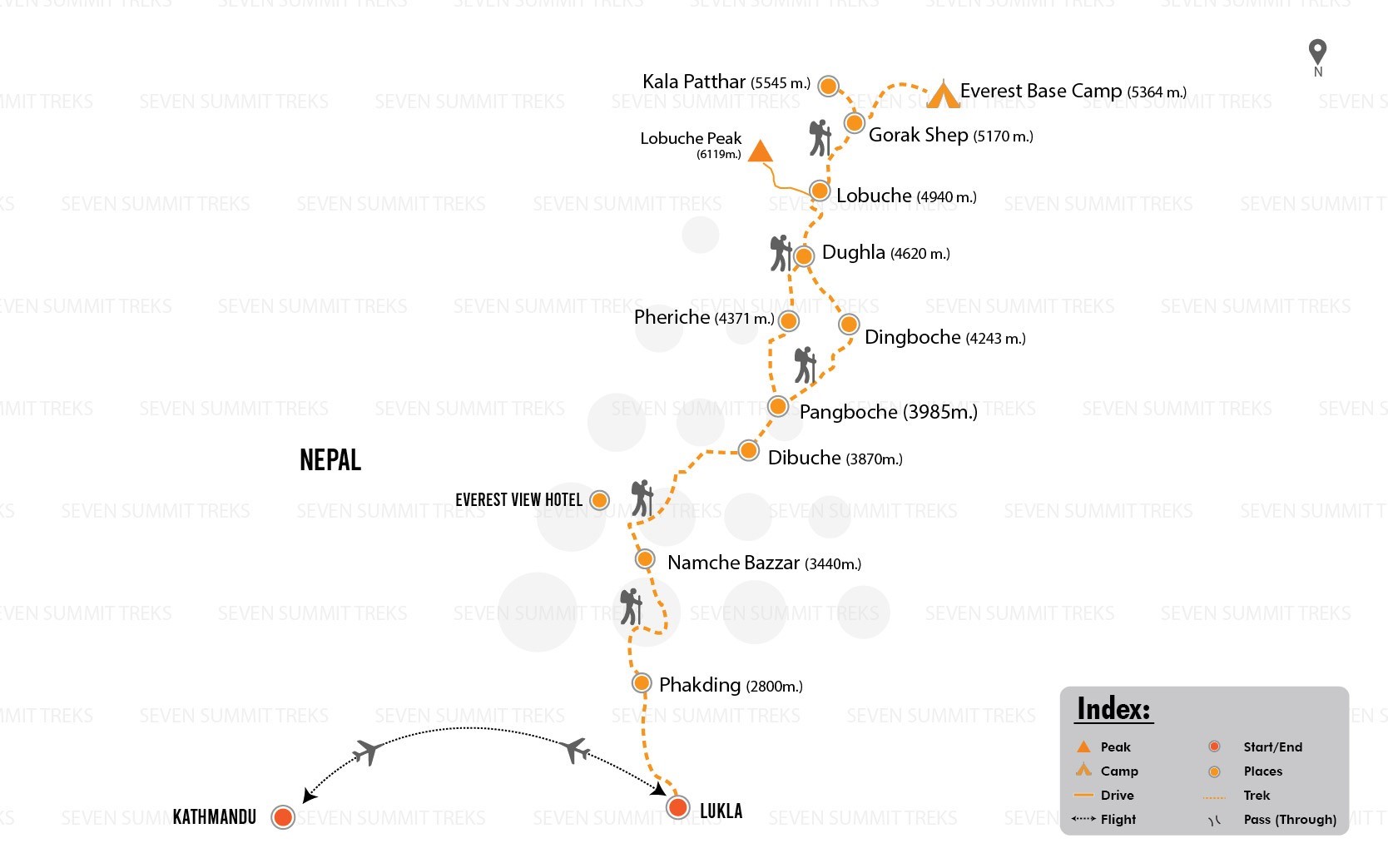
The climb from Phakding towards Namche Bazaar is one of the more physically demanding sections. The return walk from Namche to Lukla is also a long day, with several uphill and downhill sections.
Before travelling, regular walking, hiking and cardiovascular exercise can help build the fitness needed for the journey. Comfortable trekking footwear and a suitable level of physical preparation make a noticeable difference.
Altitude and Acclimatisation
The highest point of this itinerary is Hotel Everest View at approximately 3,880 metres. However, the trek returns to Namche Bazaar, at approximately 3,440 metres, for the overnight stay.
Although the itinerary does not involve sleeping at the highest point, altitude-related illness is still possible. People respond differently to changes in elevation, and physical fitness alone does not guarantee protection against altitude sickness.
Walk at a steady pace, follow your guide’s instructions and communicate immediately if you experience symptoms such as unusual headaches, dizziness, nausea or breathing difficulties.
For additional information, read the CDC guidance for travel to high altitudes.
Accommodation and Meals
Accommodation during the Everest Panorama View Trek consists of a hotel in Kathmandu and local lodges or guesthouses along the trekking route.
Mountain accommodation is generally more basic than city hotels. Rooms and facilities vary between villages, and availability can be limited during busy trekking seasons.
Breakfast, lunch and dinner are provided during the trekking days according to the package arrangements. In Kathmandu, meals other than those specifically listed as included are generally at the traveller’s own expense.
Hot showers, Wi-Fi, device charging and bottled drinks may involve additional charges at mountain lodges.
Lukla Flight Information
Flights to Lukla are an important part of this itinerary. Under normal operating arrangements, the flight takes approximately 30–35 minutes.
Depending on the season and airline operations, flights may depart from Kathmandu or Ramechhap (Manthali). In the latter case, a road transfer from Kathmandu to Ramechhap is required.
Mountain weather can change quickly, so flights may be delayed or cancelled. Travellers with fixed international departure schedules should consider allowing an additional buffer day in Kathmandu.
Trekking Permits
The Everest Panorama View Trek passes through Sagarmatha National Park and requires the applicable entry permits.
The package includes the Sagarmatha National Park entry permit and Khumbu Pasang Lhamu Rural Municipality entrance permit, with the necessary arrangements handled by the company according to the published inclusions.
You can find additional information through the Nepal Tourism Board.
What to Pack for the Trek
Weather conditions can vary significantly between Kathmandu, Lukla and the higher settlements. Packing suitable clothing and personal equipment will help make the journey more comfortable.
Recommended items include:
- Comfortable, broken-in trekking boots.
- Warm layers, including a fleece and insulated jacket.
- Waterproof jacket and trousers.
- Comfortable trekking trousers and thermal clothing.
- Warm gloves, socks and a hat.
- Sunglasses and sunscreen.
- A reusable water bottle.
- Daypack and trekking poles.
- Personal toiletries and essential medication.
- Power bank, charging cables and a headlamp.
Keep your luggage manageable and carry essential personal items in your daypack.