12-Day Nepal Tour Package Overview
A Cross-Country Route with Culture, Nature and Wildlife
This Nepal holiday package follows an overland circuit rather than concentrating on only Kathmandu and Pokhara. The itinerary begins with three nights in Kathmandu, continues for two nights in Pokhara and then changes base almost every day through Tansen, Lumbini, Chitwan and Daman. It offers substantial variety, but travellers should also expect several long road journeys and regular hotel changes.
The route is best suited to first-time visitors who want a broad introduction to Nepal’s religious traditions, historic cities, hill landscapes, wildlife and regional communities. It is an easy tour in terms of altitude and physical exertion, although sightseeing still involves steps, old paving, temple courtyards, cave entrances and periods of standing. It is not a trekking itinerary.
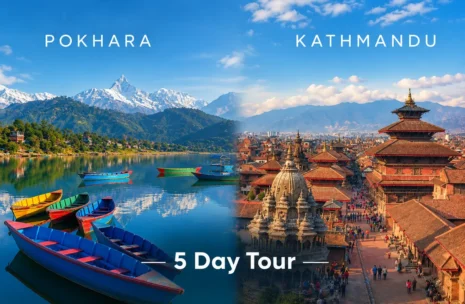
Travellers seeking a shorter and simpler two-city route can compare the 5-day Kathmandu and Pokhara tour. Visitors who want to add a short Himalayan walk should instead consider the 13-day Ultimate Nepal Discovery Tour, which includes Poon Hill.
Kathmandu Valley: Seven UNESCO Monument Zones
The first sightseeing days focus on Kathmandu Valley. The UNESCO World Heritage Centre identifies the valley as one property made up of seven monument zones: the Durbar Squares of Kathmandu, Patan and Bhaktapur; the Buddhist stupas of Swayambhu and Boudhanath; and the Hindu temple areas of Pashupati and Changu Narayan.
Day 2 visits Pashupatinath, Boudhanath, Swayambhunath and Kathmandu Durbar Square. These are not museum pieces separated from daily life. Worship, pilgrimage, cremation rites, prayer circuits, trade and local social activity continue around them. Visitors should therefore follow site-specific rules about dress, photography, footwear and access. The inner sanctum of the principal Pashupatinath temple is restricted to Hindus, but other parts of the complex can be viewed from permitted areas.
Day 3 concentrates on Patan and Bhaktapur. Patan Durbar Square is known for palace courtyards, temples and Newari metal and stone craftsmanship. Bhaktapur preserves a different urban atmosphere, with palace spaces, brick lanes, Pottery Square and the multi-tiered Nyatapola Temple. The tour returns to Kathmandu after sightseeing; Nagarkot is not part of the current detailed itinerary.
Travellers whose main interest is architecture, sacred sites and UNESCO history may also compare the dedicated Nepal World Heritage Tour.
Pokhara: Lakeside, Sarangkot and the Annapurna Outlook
The journey west to Pokhara takes most of Day 4. Road time in Nepal can change because of traffic, construction, weather and local conditions, so published drive durations should be treated as estimates. The evening is left relatively light, allowing time to check in and walk around Lakeside.
Pokhara occupies a broad valley beneath the Annapurna region. The Nepal Tourism Board’s Pokhara guide describes Phewa Lake, the Annapurna backdrop, Devi’s Fall, Seti Gorge, the World Peace Pagoda and the old bazaar among the city’s principal attractions. Day 5 begins early with a drive to Sarangkot. The viewpoint can reveal Annapurna, Dhaulagiri and Machhapuchhre in clear weather, but sunrise and mountain visibility are natural conditions and cannot be guaranteed.
After breakfast, the planned city tour includes boating on Phewa Lake and a visit to Tal Barahi Temple, followed by selected sites such as Devi’s Fall, Gupteshwor Cave, Seti Gorge and the World Peace Pagoda. The day combines viewpoints, religious sites and natural features without requiring a trek.
Tansen and Rani Mahal: A Quieter Hill-Country Stop
Day 6 leaves the better-known Kathmandu–Pokhara corridor and continues to Tansen in Palpa. According to the Nepal Tourism Board’s Tansen guide, the town is known for its old bazaar, cobbled streets, artistic Newari houses and setting on the Srinagar Hills. Its history also reflects the wider culture of Palpa and the presence of Magar and Newar communities.
The itinerary includes Tansen Durbar, the bazaar and Rani Mahal. Rani Mahal stands beside the Kali Gandaki River and gives the day a very different character from the lakefront and major heritage squares visited earlier. Because the road is winding and the programme includes a side trip to the palace, the actual time available in town will depend on the day’s traffic and departure time.
Lumbini: Archaeology and Buddhist Pilgrimage
The route descends from the hills to Lumbini on Day 7. The UNESCO record for Lumbini identifies it as the birthplace of Siddhartha Gautama and notes the importance of the Maya Devi Temple area, the Ashoka Pillar and archaeological remains connected with early Buddhist pilgrimage.
The sightseeing programme covers the Maya Devi Temple, Sacred Garden, Ashoka Pillar and selected international monasteries. The wider monastic zone contains temples built by Buddhist communities from different countries, so its architectural styles vary considerably. Lumbini is both an archaeological property and an active place of pilgrimage; quiet behaviour and respectful clothing are appropriate.
The current schedule combines the drive from Tansen with Lumbini sightseeing on the same day. This makes the timing more structured than a two-night pilgrimage visit, but it allows the package to include Lumbini without dropping Chitwan or the western hill route.
Chitwan: Two Nights for Nature and Tharu Culture
Days 8 and 9 are based in Chitwan. The UNESCO World Heritage Centre’s Chitwan National Park profile describes the park’s subtropical Terai ecosystems and its importance as habitat for the greater one-horned rhinoceros and Bengal tiger. The park also supports crocodiles, deer and extensive birdlife.
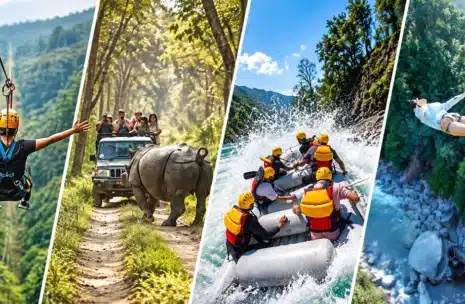
The first afternoon is used for an introductory nature or village activity, followed by a Tharu cultural programme. The following day includes a canoe journey, guided nature activities, a wildlife safari and a visit to the elephant breeding centre according to the published itinerary. These activities provide several ways to experience the river, grassland and forest environment.
Wildlife is not staged, and no responsible operator can guarantee a rhinoceros, tiger or any other species on a particular outing. Sightings depend on season, habitat conditions, park rules, timing and chance. Travellers who want a shorter nature-focused extension can compare the 3-day Chitwan wildlife safari tour.
Daman and the Return to Kathmandu
After Chitwan, the itinerary climbs to Daman rather than returning directly to Kathmandu. This breaks a long transfer and provides a cooler hill setting for the final night outside the capital. Nepal Tourism Board describes Daman as a viewpoint for a wide panorama extending from Dhaulagiri towards Everest in clear conditions.
The route continues to Kathmandu on Day 11, leaving time to rest, shop or prepare for the international flight. Day 12 is reserved for breakfast, hotel check-out and the airport transfer. This sequencing is useful because it avoids placing the international departure immediately after the longer road journey from Chitwan or Daman.
Accommodation, Meals and Transport
The Deluxe package uses three-star tourist-standard hotels and a resort in Chitwan. The separately priced Luxury option upgrades the accommodation category according to the selected quotation and availability. Exact hotels should be confirmed before booking rather than assumed from examples.
Breakfast is included on most touring days. The Chitwan portion includes breakfast, lunch and dinner. Lunches and dinners outside Chitwan are generally left open so travellers can choose restaurants and dishes, but any meal not expressly listed as included is paid separately.
Airport transfers, sightseeing and inter-city travel use a private air-conditioned vehicle sized for the group. Domestic flights can be requested for selected sectors, but they are optional, subject to availability and charged separately. The wider collection of Nepal tour packages can help travellers compare different routes, durations and activity levels before choosing.
Why Choose Our 12-Day Nepal Tour Package?
More Than the Standard Two-City Circuit
The itinerary includes Kathmandu and Pokhara but continues through Tansen, Lumbini, Chitwan and Daman. This gives travellers a broader view of Nepal’s middle hills and Terai rather than repeating similar city sightseeing each day.
Private Transport and Adjustable Pace
Private ground transport makes airport transfers, sightseeing days and inter-city journeys easier to coordinate. The order of visits can be adjusted when traffic, weather, local events or site conditions require a practical change.
Guides and Entrance Fees Included
The published package includes professional guide services in Kathmandu, Pokhara, Lumbini and Chitwan, together with entrance fees for the scheduled monuments, museums, religious sites and national park activities. This reduces the number of separate payments travellers need to arrange during guided days.
Deluxe and Luxury Accommodation Choices
Travellers can select the standard Deluxe package or request the separately priced Luxury option. This allows the same route to suit different comfort preferences while keeping the core sightseeing programme consistent.
A Local Operator Established in 2003
Nepal Tour Hiking is operated by Adventure Land Nepal Tours and Travels, a Kathmandu-based company serving travellers since 2003. The itinerary can be discussed with the local team before arrival, which is particularly useful for families, private groups and travellers with specific mobility, dietary or accommodation needs.
Customisation Without Hiding the Trade-Offs
Extra nights, domestic flights, upgraded hotels and additional activities can be quoted on request. Adding an activity may require removing another stop or extending the trip; the team should confirm the revised route and price before the booking is finalised.